


Live Translator: AI translate
4.6134.00 Reviews
App Specs
- Version
- 2.1.1
- Updated On
- License
- Free
- Downloads
- 1,000,000+
- Developer
- TERASsoft
- Categories
- Tools
- Platform
- Android
Screenshots
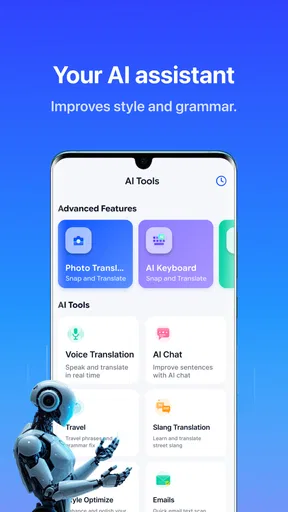
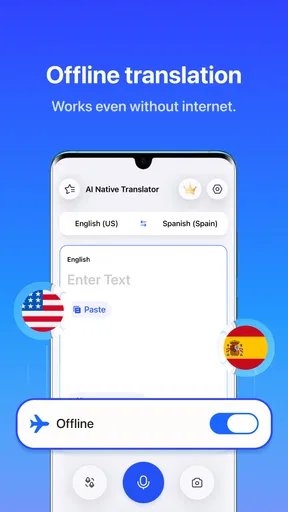
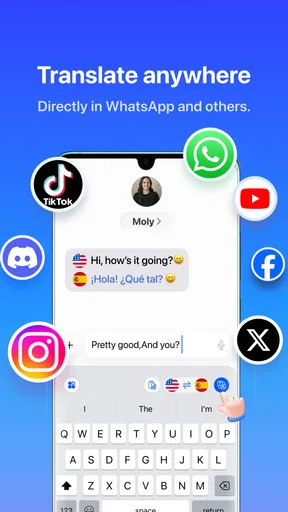
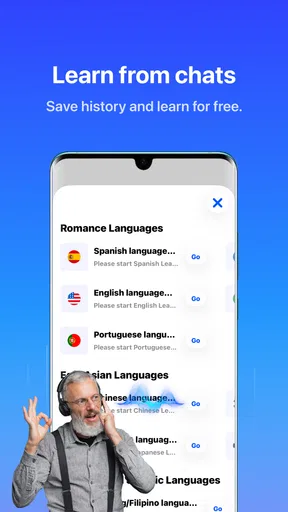
 Analysis by AppCompare
Language barriers rarely appear at a convenient time. They show up while I’m trying to understand a sign, ask a quick question, or reply to someone who doesn’t share my language. In those moments, the real test for a translator is not whether it sounds impressive; it’s whether it saves time without adding another chore. Live Translator: AI translate is built for those quick handoffs between languages, and I find that practical focus more useful than treating translation as a formal study exercise.
A quick tool for moments that do not wait
What I want from a phone translator is a short route from “I don’t understand” to a usable next step. This app brings together spoken, typed, and camera-based translation, so I can choose the input that fits the situation instead of trying to force every task through a keyboard. That makes it most appealing as a pocket utility: useful in brief exchanges, while reading something unfamiliar, or when I need to draft a simple message.
I would still treat any automated translation as a starting point, not an authority. A translated phrase can help me get the gist or make a basic request, but tone and context matter, especially in a sensitive conversation. For anything official, medical, legal, or otherwise high-stakes, I would check the wording with a qualified person rather than rely on a quick app result.
Getting Started with Live Translator: AI Translate
The first thing you’ll notice when you download Live Translator: AI Translate is its sleek and intuitive interface. It’s like the app is gently guiding you with open arms, saying, “Don’t worry, I’ve got this.” Setting it up is a breeze. You’re just a few taps away from breaking down language barriers like they’re no big deal.
As a free tools app from TERASsoft, it has a 4.4 average from around 4,500 ratings and more than 100,000 installs. It is rated for everyone, and version 1.6.2 is listed for Android 7.0 and above. The app also offers in-app purchases, so I’d check the purchase details before committing to any paid option; the free starting point makes it easy to see whether its workflow suits you first.
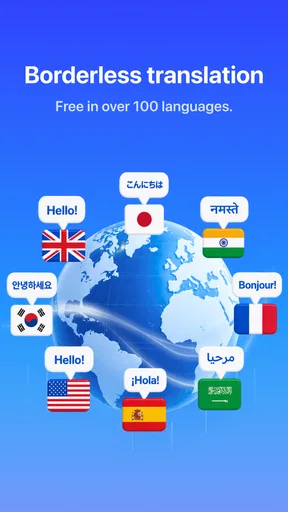
The app supports a vast array of languages, and not just the usual suspects. We’re talking everything from Spanish to Swahili. It’s like having a mini United Nations in your pocket. And the best part? The real-time AI translation is as smooth as silk. I tested it by having a conversation in French (which I barely speak), and the app handled it like a pro. Impressive, right?
Features that Make It Shine
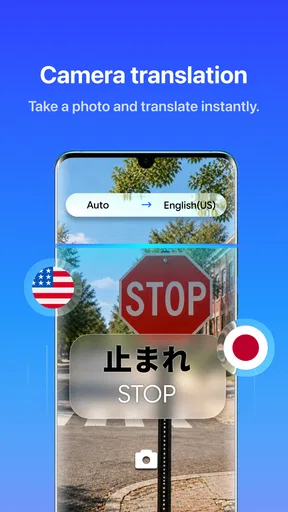
One of my favorite features is the camera translation. You simply point your camera at any text, and voilà, instant translation! This is particularly handy for menus, signs, or any written text you stumble upon when you’re out and about. No more guessing what you’re ordering for dinner or where the nearest restroom is!
Worth Reading Before You Choose

Flipboard Shows What News Apps Must Do Beyond the Feed

Switching to Android Auto Means Rethinking Your Driving Routine

Google Calendar Makes a Crowded Week Easier to Manage

Ludo King Makes the Most of the Minutes Between Plans

Baby Panda World Brings Quick Play to Modern Phones, but Its Game Library Feels Busy

ESPN’s Live Game View Makes Following Close Games Easier
For camera use, I get the best results by holding the phone steady, framing just the words I need, and avoiding glare or deep shadows. If a sign includes several blocks of small print, translating the relevant line first is more practical than expecting one quick scan to explain the whole layout. I also treat names, addresses, and unusual abbreviations carefully: even a readable translation may not preserve a detail that should be copied exactly.
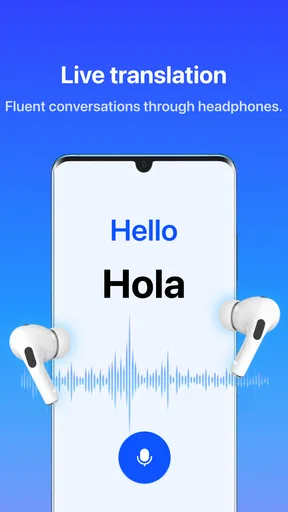
Another nifty feature is the voice translation. Just speak into your phone, and the app translates your words almost instantly. It’s perfect for those "on-the-go" moments when typing isn’t feasible. I found this especially useful during a recent trip, where I needed to ask for directions in a bustling market.
In a real exchange, I’d keep each spoken request short and give the other person room to answer before moving on. A long, compound question is harder to translate cleanly and harder for anyone to respond to, even when the app is working well. In a noisy place, moving somewhere quieter or speaking close to the phone can also be more useful than repeating the same sentence louder. For names or precise numbers, I’d confirm them by typing or showing the screen rather than assuming speech recognition caught every detail.
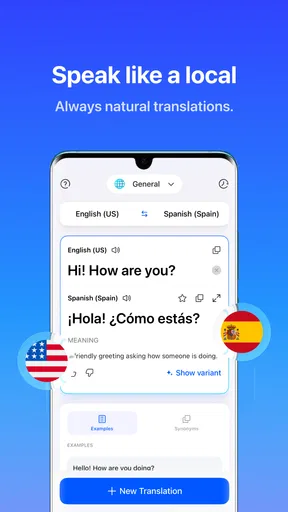
And let’s not forget the text translation. Need to send a message in another language? Type it out, hit translate, and you’re good to go. It’s like having a personal translator sitting in your pocket, ready to assist at any moment.
For a message that matters, I’d write the original in plain, direct language before translating it. Short sentences and one clear request make it easier to spot whether the result still says what I intend. If the recipient’s response is important, I’d also translate it back or ask a simple follow-up to check that we understood each other. That small extra step takes longer than sending a one-line translation, but it can prevent an avoidable mix-up.
Where it fits into a normal day
The strongest use case is not a perfect, uninterrupted conversation; it is a string of small problems that would otherwise send me searching across several tools. I might read a menu with the camera, ask a nearby person a short question by voice, then type a follow-up message. Having those input styles in one place reduces the mental switch between separate translation apps and makes the phone feel more like a practical backup than a project.
For a traveler, that can mean checking a station sign before choosing a platform, understanding a posted instruction, or asking where to find a familiar service. For a student, it can help with the gist of a short notice or a phrase encountered while reading. Someone who works across languages may use it for a quick, low-stakes exchange. In each case, I’d use it to make the first move, then verify anything where a misunderstanding would have real consequences.
It is less suited to someone who needs a polished interpreter for extended meetings, nuanced negotiation, or continuous group discussion. In those settings, pauses to speak into a phone can interrupt the flow, and a human interpreter or a tool designed specifically for structured meetings may be a better fit. Likewise, if I only need to translate an occasional phrase while already using another trusted translator, switching apps may not save enough time to justify changing my routine.
Why It Stands Out
What truly sets this app apart is its use of AI technology. The translations are not only quick but also incredibly accurate. The app learns and adapts, improving its translations the more you use it. It’s like having a translator that grows with you, understanding your needs better each time.
Speed is useful, but I would judge reliability by the kind of sentence I give it. A simple request with a clear subject is a fair test; sarcasm, slang, local expressions, or a sentence that depends on earlier context is much less predictable for any automatic translator. My practical tip is to translate the key sentence first, then add background only if needed. That keeps the exchange moving and makes it easier to notice when the output seems off.
Plus, the app works offline, which is a huge bonus. You can download language packs and use them without an internet connection. This is a lifesaver when you’re in areas with spotty Wi-Fi or trying to save on data while traveling.
I’d prepare for offline use before leaving a reliable connection: choose the languages I expect to need and make sure the relevant packs are available. Offline access is most valuable as a fallback for predictable travel tasks, not as a reason to assume every language pair or complex phrase will behave exactly as it does online. If I’m heading somewhere with uncertain coverage, I’d also keep essential addresses and reservations saved in a form I can read without translating.
Limits that matter in practice
Translation quality can shift with the input. A camera may struggle with cramped or obscured text; speech can be affected by noise, accents, and people speaking over one another; typed phrases can lose meaning when they depend on cultural context. Those are not reasons to dismiss the app, but they do change how I use it. I choose the clearest input available and check the result before acting on it.
There is also a social trade-off. Holding up a phone and taking turns speaking can feel awkward when someone expects a fast, natural conversation. I’d explain briefly that I’m using a translator, keep the exchange focused, and avoid treating the screen as a substitute for listening. For longer chats, learning a few basic greetings and polite phrases can make the interaction warmer, while the app handles the harder words.
Compared with a pocket phrasebook, this kind of tool can handle a wider range of spontaneous wording, but a phrasebook gives you expressions you can review in advance and use without a connection or a device workflow. Compared with a general-purpose translation app, the useful distinction here is the combination of voice, camera, and text in one translator. If your priority is a highly controlled professional workflow, a specialist service is more appropriate; if your need is everyday comprehension, the combined modes are the appeal.
Wrapping Up My Thoughts
In a world that’s becoming increasingly connected, an app like Live Translator: AI Translate is more relevant than ever. It’s not just about translation; it’s about connection, understanding, and making the world a little smaller. Whether you’re a frequent traveler, a student, or just someone curious about different cultures, this app is worth a spot on your home screen.
My recommendation is straightforward: try it if you often need quick help with signs, short spoken exchanges, or simple messages, and take a moment to prepare offline language packs when travel is on the calendar. I would skip it as my sole solution for confidential, high-stakes, or highly nuanced communication, and I wouldn’t expect a phone to replace a human interpreter. Used with that distinction in mind, it can remove a little friction from everyday communication without asking me to reorganize how I use my phone.
So, go ahead and give it a whirl. Download it, play around, and see how it can transform the way you communicate. Trust me, you’ll wonder how you ever managed without it!
Pros
- Supports multiple languages seamlessly.
- Real-time voice translation feature.
- User-friendly interface design.
- Offline mode available for travelers.
- Text recognition from images.
Cons
- Requires stable internet for optimal use.
- Limited languages in offline mode.
- Occasional translation inaccuracies.
- Subscription needed for premium features.
- High battery consumption during use.
FAQs for Live Translator: AI translate
What languages does Live Translator: AI Translate support?
Live Translator: AI Translate supports over 100 languages, making it a versatile tool for global communication. Whether you need to translate a simple phrase or a complex sentence, this app ensures accuracy and ease. Users can switch between languages seamlessly, which is perfect for travelers, students, and professionals.
How does the offline mode work in Live Translator: AI Translate?
The offline mode in Live Translator: AI Translate allows users to download language packs for use without an internet connection. This feature is especially useful for travelers who may not have reliable internet access. Users can still translate phrases and sentences, though some advanced features might be limited offline.
Is Live Translator: AI Translate free to use?
Live Translator: AI Translate offers both free and premium versions. The free version includes basic translation features, while the premium subscription unlocks advanced features like offline access, voice translation, and no ads. Users can choose the version that best suits their needs and budget.
How accurate is the voice translation feature in Live Translator: AI Translate?
The voice translation feature in Live Translator: AI Translate is highly accurate, utilizing advanced AI technology to process speech in real time. It can handle various accents and dialects, providing reliable translations. However, background noise may affect accuracy, so it's best used in quieter environments.
Can Live Translator: AI Translate handle specialized terminology?
Yes, Live Translator: AI Translate can handle specialized terminology in fields like medicine, law, and technology. The app's AI continuously learns from user interactions to improve its understanding of niche vocabularies. For best results, users should ensure the app is updated to the latest version.


